
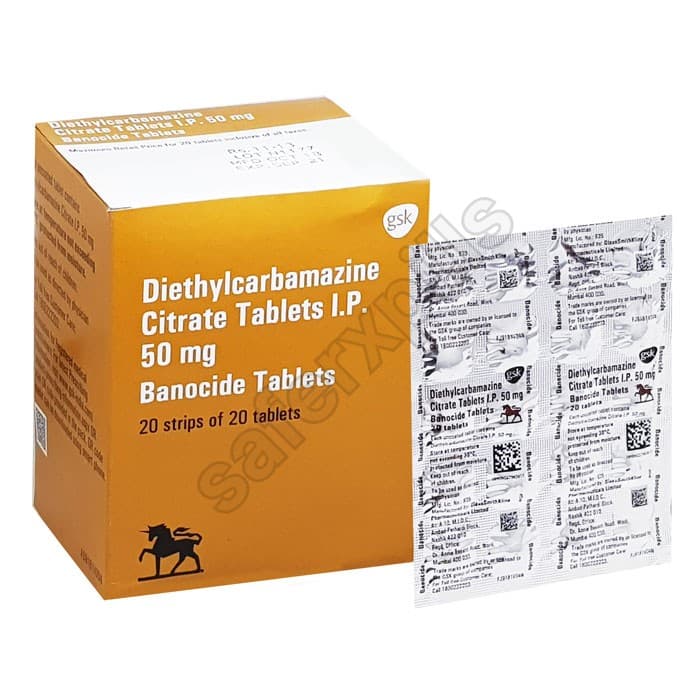
Banocide 50mg (Diethylcarbamazine)
Generic: Diethylcarbamazine
Select Pack Size:
Selected: 200 Tablets
$25.00 total
$38.00 total
Save 34%About Banocide 50mg (Diethylcarbamazine)
Introduction
Banocide 50mg contains Diethylcarbamazine (DEC), an anthelmintic medication specifically designed to treat parasitic worm infections. Manufactured by GlaxoSmithKline Pharmaceuticals Ltd, one of the world's leading pharmaceutical companies, Banocide represents decades of expertise in producing effective antiparasitic treatments. This medication is particularly valuable in treating filarial infections that affect millions of people worldwide.
Each tablet contains 50mg of diethylcarbamazine citrate, the active pharmaceutical ingredient that targets parasitic worms living in the lymphatic system and subcutaneous tissues. GlaxoSmithKline's commitment to quality manufacturing ensures that every Banocide tablet meets stringent international pharmaceutical standards, providing patients with a reliable treatment option for challenging parasitic infections.
What It Treats
Banocide 50mg is primarily prescribed to treat lymphatic filariasis, a parasitic disease caused by thread-like worms including Wuchereria bancrofti, Brugia malayi, and Brugia timori. These microscopic worms are transmitted through mosquito bites and can cause severe swelling of the limbs and genitals, a condition commonly known as elephantiasis. The medication effectively kills both the adult worms and the microfilariae (larval stage) circulating in the bloodstream.
Additionally, Banocide is highly effective against tropical pulmonary eosinophilia, a lung condition caused by an allergic reaction to filarial worms. It also treats loiasis (African eye worm caused by Loa loa) and can be used as part of combination therapy for other filarial infections. The medication plays a crucial role in mass drug administration programs aimed at eliminating lymphatic filariasis in endemic regions.
In some cases, healthcare providers may prescribe Banocide for visceral larva migrans caused by Toxocara species, though this is considered an off-label use. The medication's broad antiparasitic activity makes it an essential tool in tropical medicine and infectious disease management.
How It Works
Diethylcarbamazine works through multiple mechanisms to eliminate parasitic worms from the body. The medication primarily affects the muscle activity of the parasites, causing them to become paralyzed and lose their ability to maintain their position in the lymphatic vessels or bloodstream. This paralysis makes the worms more vulnerable to the body's immune system and easier to eliminate through natural processes.
The drug also alters the surface membrane of the microfilariae, making them more recognizable to the body's immune cells. This enhanced recognition triggers an immune response that helps destroy the parasites. Additionally, diethylcarbamazine appears to sensitize the worms to phagocytosis, the process by which white blood cells engulf and destroy foreign organisms.
At the cellular level, diethylcarbamazine interferes with the parasite's arachidonic acid metabolism, disrupting essential biochemical pathways necessary for the worm's survival. This multi-pronged approach ensures effective elimination of both adult worms and their offspring, breaking the cycle of infection and preventing disease progression.
Dosage and Administration
The dosage of Banocide 50mg varies depending on the specific parasitic infection being treated, patient weight, and regional treatment protocols. For lymphatic filariasis, the typical adult dose is 6mg per kilogram of body weight per day, divided into three doses, taken after meals. Treatment usually continues for 12 days, though your healthcare provider may adjust this based on your response to therapy and the severity of infection.
For tropical pulmonary eosinophilia, the recommended dose is generally higher, ranging from 4-6mg/kg daily in divided doses for 14-21 days. Patients with loiasis may require different dosing schedules, often starting with lower doses (50-100mg daily) and gradually increasing to minimize adverse reactions. Always take Banocide tablets with or after food to reduce gastrointestinal side effects.
Swallow the tablets whole with a full glass of water. Do not crush, chew, or break the tablets unless instructed by your healthcare provider. It's crucial to complete the entire prescribed course even if symptoms improve earlier, as stopping treatment prematurely may allow the infection to persist or return. In mass drug administration programs for filariasis elimination, a single annual dose of 6mg/kg may be prescribed as part of community-wide prevention strategies.
Pediatric dosing follows the same weight-based calculations as adults, but should always be determined by a qualified healthcare provider. Regular follow-up appointments and blood tests may be necessary to monitor treatment effectiveness and detect any complications. If you miss a dose, take it as soon as you remember, but skip it if it's almost time for your next scheduled dose. Never double up on doses to compensate for a missed one.
Side Effects
Common side effects of Banocide 50mg often result from the body's immune response to dying parasites rather than the medication itself. These include headache, dizziness, nausea, and vomiting, which typically occur within the first few days of treatment. Many patients experience fever, fatigue, and general malaise as the medication begins working. Joint and muscle pain are also common, along with loss of appetite. These symptoms usually subside within 3-5 days as the body adjusts to treatment.
In patients with high microfilarial loads, allergic-type reactions may occur, including skin rashes, itching, and swelling. Some individuals develop lymph node tenderness and swelling (lymphangitis), painful inflammation of the lymphatic vessels, or temporary worsening of existing lymphedema. These reactions, known as the Mazzotti reaction, occur due to the rapid death of parasites and the release of their antigens into the bloodstream.
Serious side effects requiring immediate medical attention include severe allergic reactions (difficulty breathing, chest tightness, severe skin reactions), vision changes or eye pain (particularly in loiasis patients), persistent high fever above 102°F (39°C), severe abdominal pain, or signs of encephalopathy such as confusion, seizures, or loss of consciousness. In rare cases, patients with loiasis may develop serious eye complications if treatment is not carefully monitored.
Other less common side effects include sleep disturbances, depression, protein in the urine, and temporary changes in blood cell counts. If you experience any unusual symptoms or if common side effects persist beyond a week or worsen over time, contact your healthcare provider promptly. Your doctor may prescribe antihistamines or corticosteroids to manage severe allergic reactions during treatment.
Drug Interactions
Banocide 50mg can interact with several medications, potentially affecting its effectiveness or increasing the risk of side effects. Corticosteroids such as prednisone or dexamethasone are often prescribed alongside diethylcarbamazine to reduce inflammatory reactions when treating heavy parasitic infections. However, this combination should only be used under close medical supervision as it may mask serious adverse reactions.
Antihistamines such as diphenhydramine, cetirizine, or loratadine may be recommended by your doctor to manage allergic-type reactions during treatment. These do not typically interfere with Banocide's effectiveness but help control uncomfortable symptoms. Blood thinners like warfarin may require dosage adjustments during Banocide therapy, as parasitic infections and their treatment can affect blood clotting parameters.
Avoid taking Banocide simultaneously with albendazole or ivermectin unless specifically directed by your healthcare provider as part of a combination therapy protocol for filariasis elimination programs. When used together in supervised settings, these combinations can be highly effective, but require careful monitoring. Medications that affect liver enzyme function may alter how your body processes diethylcarbamazine, potentially requiring dose adjustments.
Inform your healthcare provider about all medications you're taking, including prescription drugs, over-the-counter medicines, herbal supplements, and vitamins. This is particularly important if you're taking medications for chronic conditions such as diabetes, heart disease, or psychiatric disorders. Your doctor needs a complete medication history to safely prescribe Banocide and anticipate potential interactions.
Precautions and Warnings
Pregnancy and breastfeeding: Banocide should be avoided during pregnancy unless the potential benefits clearly outweigh the risks. While there is limited data on human pregnancy outcomes, animal studies have shown potential concerns. The medication passes into breast milk, so nursing mothers should discuss treatment timing with their healthcare provider. In some cases, treatment may be postponed until after delivery or weaning.
Patients with high loiasis microfilarial loads (Loa loa) require special precaution when taking diethylcarbamazine, as rapid parasite death can trigger severe encephalopathy and potentially fatal complications. If you've traveled to or lived in Central or West Africa where loiasis is endemic, your doctor must screen for this infection before starting Banocide therapy. Pre-treatment testing and careful dose titration are essential in these cases.
Individuals with kidney or liver disease may require dosage adjustments or more frequent monitoring during treatment, as these organs are responsible for processing and eliminating the medication. Pre-existing heart conditions warrant caution, as some patients experience changes in heart rate or blood pressure during treatment. Those with a history of seizures or epilepsy should be closely monitored, as rare cases of treatment-related seizures have been reported.
Avoid alcohol consumption during treatment, as it may increase the risk of side effects and liver stress. The medication may cause dizziness or visual disturbances in some patients, so avoid driving or operating heavy machinery until you know how Banocide affects you. Store the medication at room temperature away from moisture and heat, and keep it out of reach of children. Do not use Banocide beyond its expiration date, and dispose of unused medication properly according to local pharmaceutical waste guidelines.
Shipping and Availability
SafeRxPills is committed to providing access to essential medications like Banocide 50mg to patients who need effective treatment for parasitic infections. We understand that filarial diseases and other parasitic conditions require prompt and reliable treatment, which is why we've streamlined our ordering and delivery process to ensure you receive your medication safely and efficiently.
Men across the USA, UK, Australia and Canada order Banocide 50mg (Diethylcarbamazine) from SafeRxPills with discreet, tracked delivery in plain packaging. Most orders arrive within 7 to 14 days.
Related Products
Browse our full Antibiotics range. Available options include Azithromycin 500mg (macrolide, respiratory infections). Always complete the full prescribed antibiotic course.
Related Guides
Key Information
- ✓Active Ingredient: Diethylcarbamazine
- ✓Category: Antibiotics
- ✓Form: Tablet
- ✓Brand Equivalent: GlaxoSmithKline Pharmaceuticals Ltd